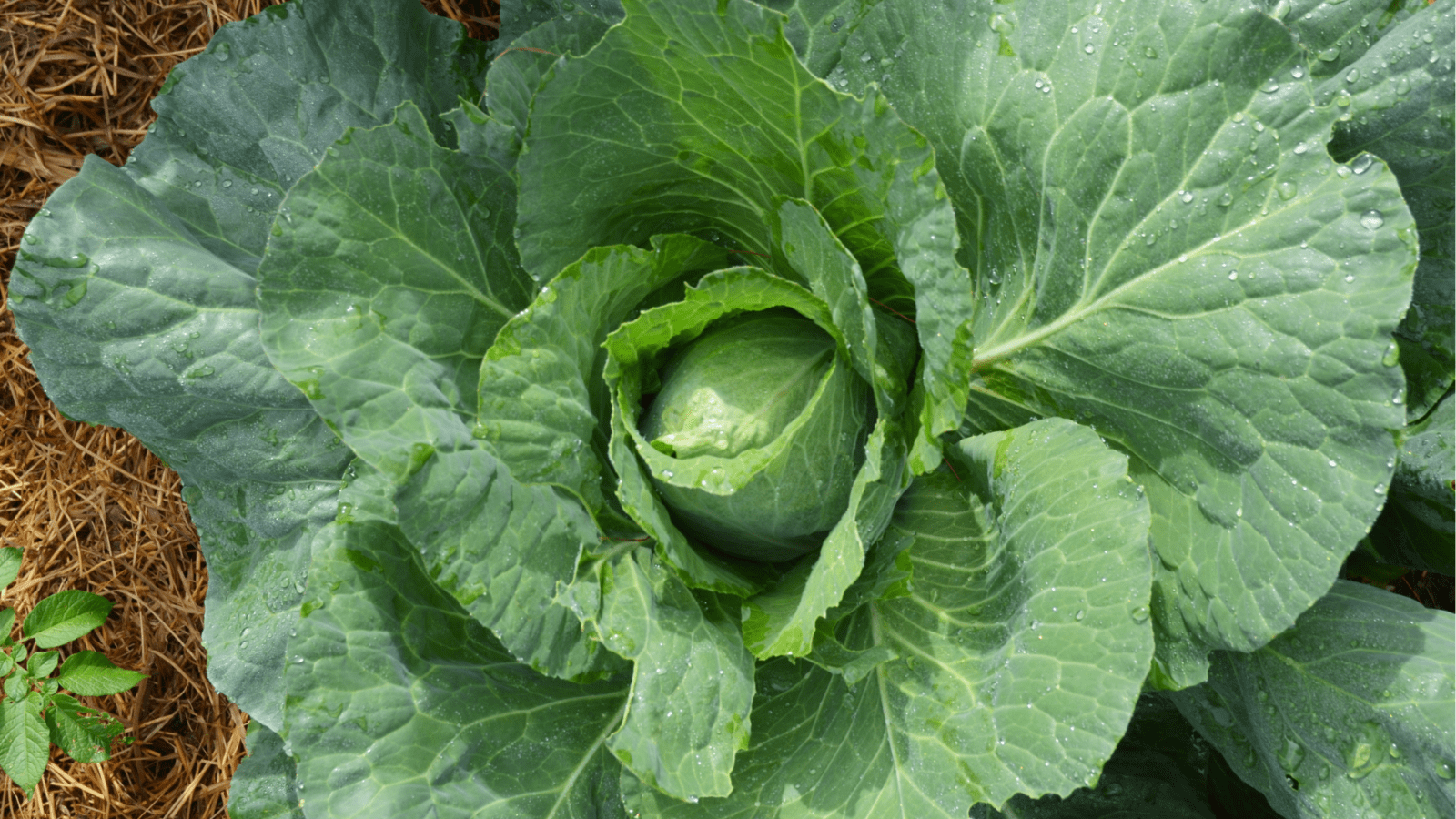
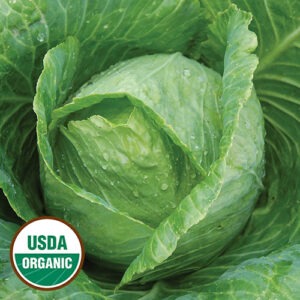
Discover the charm and utility of the ‘Early Jersey Wakefield’ cabbage, a beloved historic variety cherished by gardeners and food enthusiasts alike. First introduced in the United States in the 1840s, this short-season cabbage quickly won the hearts of gardeners for its reliable growth and delicious taste.
Whether grown in a spacious backyard or a small urban garden, the ‘Early Jersey Wakefield’ fits perfectly, thanks to its compact size.
Not only is the ‘Early Jersey Wakefield’ cabbage easy to grow, but it also has an exceptional flavor, making it the perfect choice for making fresh salads or homemade sauerkraut.
Continue reading to learn more about ‘Early Jersey Wakefield’ cabbage’s history, find out what modern gardeners are saying about this standout variety, and discover a recipe for cabbage slaw that is sure to be a hit this summer.
History
The ‘Early Jersey Wakefield’ cabbage was first grown in the United States by Francis Brill of Jersey City, New Jersey, in 1840 from an existing English variety named ‘Early Wakefield.’
Brill developed ‘Early Jersey Wakefield’ in the early 1840s, and it became a local favorite around Jersey City, New Jersey. Peter Henderson, a prominent New York seedsman called “the father of horticulture and ornamental gardening” in the United States by his contemporaries, wrote about the variety in his 1867 book, Gardening for Profit: A Guide to the Successful Cultivation of the Market and Family Garden:
“We have experimented with scores of varieties in that time, [since the 1840s presumably] and find nothing equal to it…”
Henderson claimed the seeds were in high demand, noting that at several times, seed sold for as much as $20 per pound—or about five times the rate of other varieties.
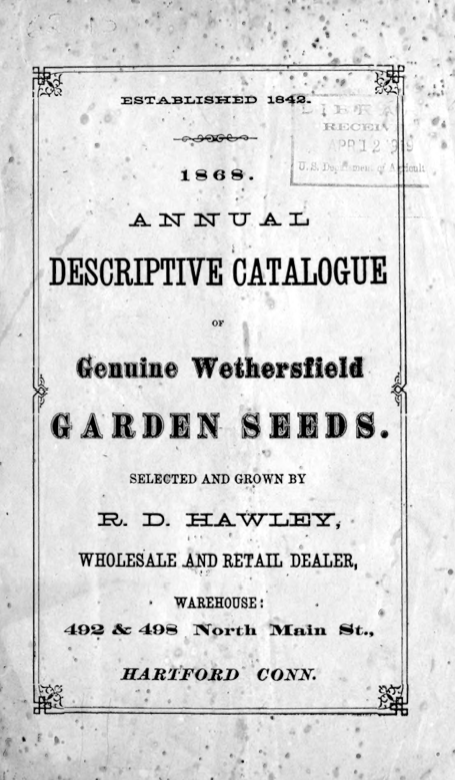
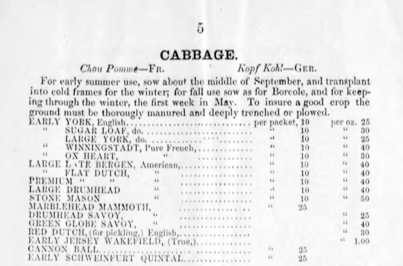
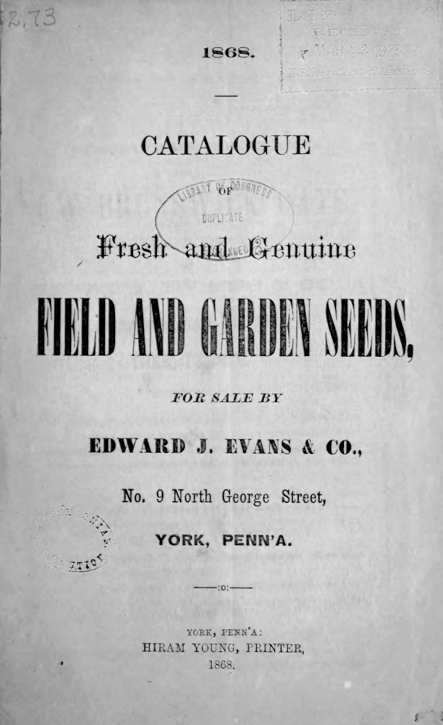
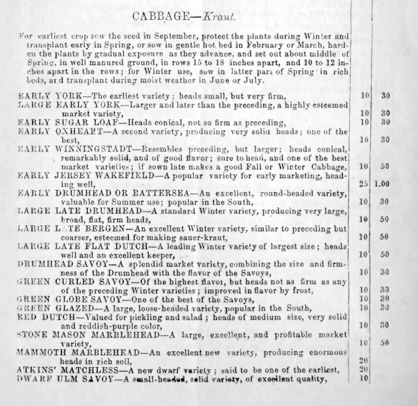
The earliest seed catalog mention of the ‘Early Jersey Wakefield’ cabbage that Sara Straate, Seed Savers Exchange’s seed historian, could find is in two different 1868 catalogs—R.D. Hawley & Co. of Hartford, Connecticut, and Edward J. Evans & Co. of York, Pennsylvania.
1868 R.D. Hawley & Co. of Hartford, Connecticut, catalog1868 R.D. Hawley & Co. listing of ‘Early Jersey Wakefield’ selling at $1 per ounce, with other varieties marketed as $.25-$.50 per ounce for the same quantity.1868 Edward J. Evans & Co. catalog cover1868 Edward J. Evans & Co. listing for ‘Early Jersey Wakefield’ cabbage describing the variety as “a popular variety for early marketing, heading well.”
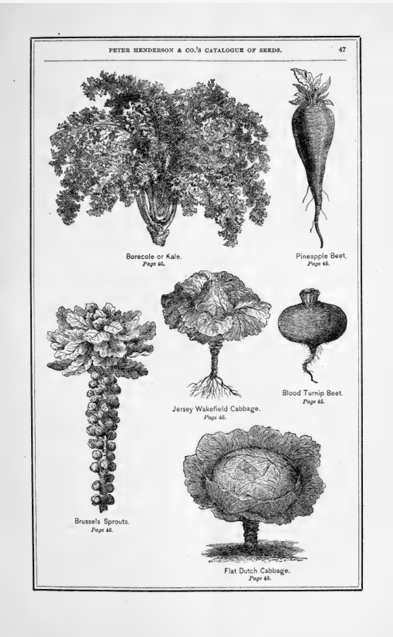
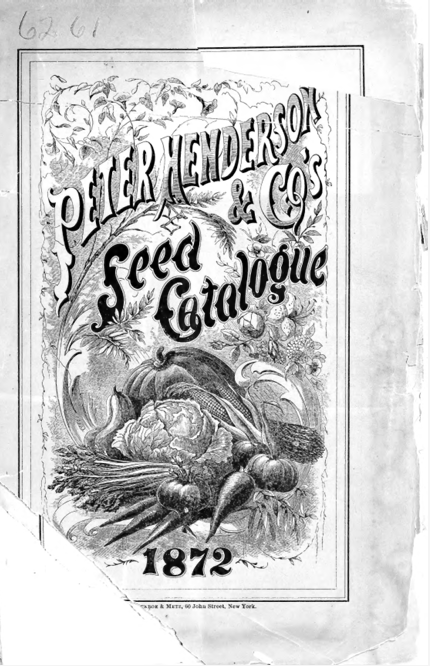
The ‘Early Jersey Wakefield’ cabbage became very popular very quickly. The 1872 Peter Henderson & Co. catalog, page 46, states:
“This variety is grown almost to the exclusion of all other kinds by the leading market gardeners in the vicinity of New York; it is also extensively grown in all parts of the county, as the best and most profitable early variety in cultivation.”
1872 Peter Henderson & Co. illustration of the ‘Jersey Wakefield’ cabbageHenderson’s 1872 catalog cover
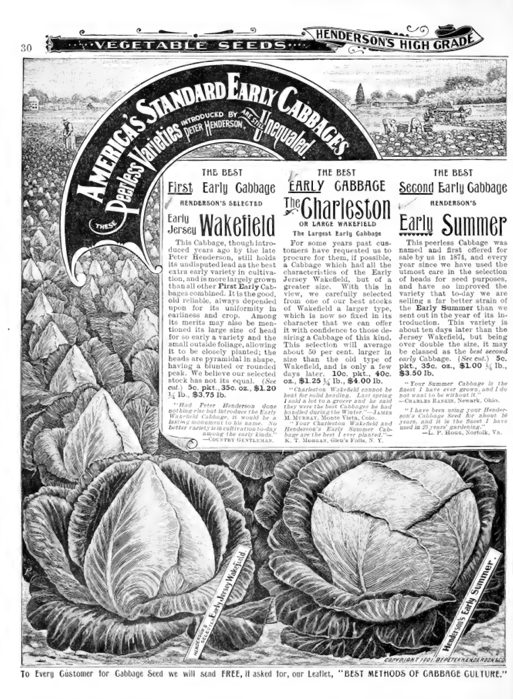
By 1901/1902, ‘Early Jersey Wakefield’ was being sold by no fewer than 180 different seed companies in the United States and Canada.
Henderson’s 1902 catalog listing for ‘Early Jersey Wakefield’ cabbageHenderson’s 1902 catalog cover
This variety has stood the test of time, but you don’t need to just take our word for it. Read what modern gardeners in the SSE community have said about this historic variety.
Five-star gardener reviews
“This is my go-to cabbage every year. It grows very well in southern Indiana with limited issues with bugs. The flavor is very mild, making it a great addition to things like roll-less cabbage rolls. The plants don’t get massive which helps for small space gardens. I’ve grown this in a square foot garden more than once and had success.”
—Roger
“This has been in our garden for several years now and we love it. Growing up, I really didn’t like cabbage too much… But this one? A home-run!! Love it and in fact, we have made homemade sauerkraut from it! WOW, great kraut!! Recommended to anyone and is easy to grow!”
—Gary
“This is from a consumer, not a grower: just had a fantastic salad of shredded ‘Early Jersey Wakefield’—much easier to cut than the cannonball varieties, and no ‘cabbagy’ flavor. Why don’t I see this at stores and farmers markets?”
—Barbara
“I had never grown cabbage before and tried this variety as my starter experience. Boy was it a great choice. I used bt spray throughout the season to combat worms, and the cabbage turned out great. Nice size and great flavor.”
—Teresa
Join the legacy and savor the benefits of growing this historic and beloved cabbage variety. With its delightful taste, ease of growth, and fascinating history, the ‘Early Jersey Wakefield’ cabbage is a must-have for any garden.
Submitted by Meredith Burks, SSE marketing and communications director
“This recipe is from my great-grandmother, Eva Kirsch, and is supposedly an old German recipe,” says Meredith. “It is a family favorite for summer potlucks, and it keeps really well.”
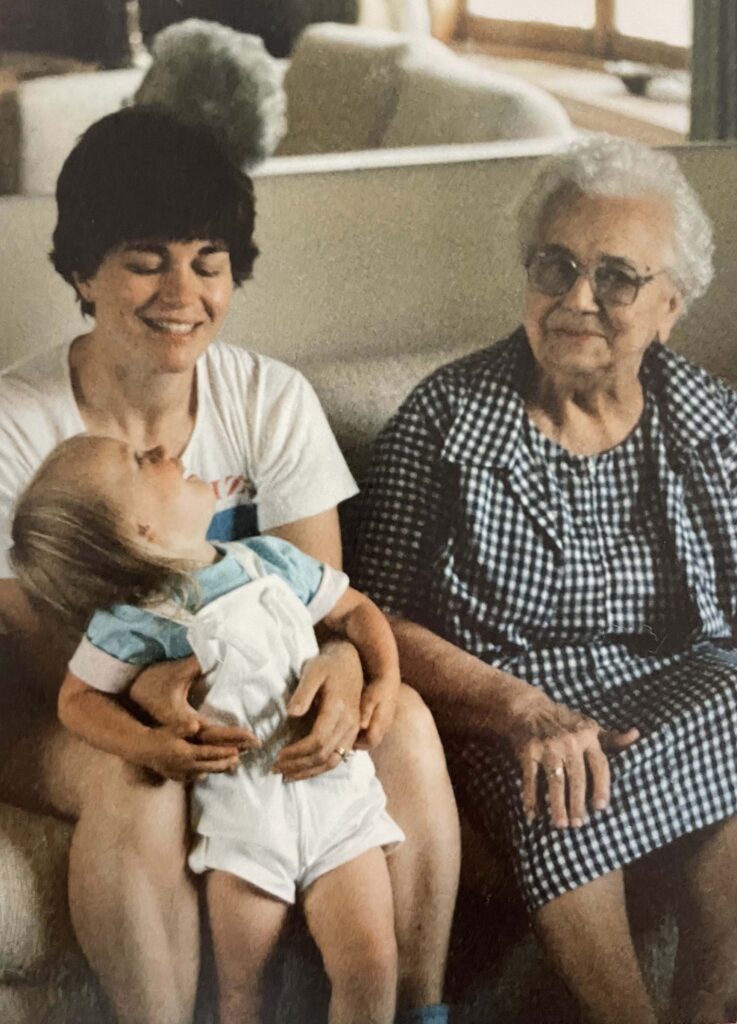
Meredith Burks, her mother Sue Burks, and great-grandmother Eva Kirsch
Salad: Mix all ingredients together. Sprinkle mixture with ½ to ¾ cup of sugar and let it stand at room temperature for two hours.
Dressing: Put all ingredients in a saucepan and bring mixture to a boil. Pour over cabbage and toss. Cool to room temperature, then cover and refrigerate for at least 2 hours.
More to Explore
Shop 'Early Jersey Wakefield' cabbage seeds and read more stories from our collection. When you make a purchase from Seed Savers Exchange, you help fulfill our nonprofit mission to protect our food and garden heritage. Do even more good by making a donation to help us preserve and share even more heirloom varieties!